Thursday, July 8, 2010

IT facts in india


The Indian information technology (IT) industry has played a major role in placing India on the international map. The industry is mainly governed by IT software and facilities for instance System Integration, Software experiments, Custom Application Development and Maintenance (CADM), network services and IT Solutions. According to Nasscom's findings Indian IT-BPO industry expanded by 12% during the Fiscal year 2009 and attained aggregate returns of US$ 71.6 billion. Out of the derived revenue US$ 59.6 billion was solely earned by the software and services division. Moreover, the industry witnessed an increase of around US$ 7 million in FY 2008-09 i.e. US$ 47.3 billion against US$ 40.9 billion accrued in FY 2008-09


IT Outsourcing in India


IT Outsourcing in IndiaAs per NASSCOM, IT exports in business process outsourcing (BPO) services attained revenues of US$ 48 billion in FY 2008-09 and accounted for more than 77% of the entire software and services income. Over the years India has been the most favorable outsourcing hub for firm on a lookout to offshore their IT operations. The factors behind India being a preferred destination are its reasonably priced labor, favorable business ambiance and availability of expert workforce. Considering its escalating growth, IBM has plans to increase its business process outsourcing (BPO) functions in India besides employing 5,000 workforces to assist its growth. In the next few years, the industry is all set to witness some multi-million dollar agreements namely:
A 5 year agreement between HCL Technologies and News Corp for administering its information centers and IT services in UK. As per the industry analysts, the pact is estimated to be in the range of US$ 200-US$ 250 million
US$ 50 million agreement between HCL Technologies and Meggitt, UK-based security apparatus manufacturer, for offering engineering facilities.
Global giant Walmart has short listed there Indian IT dealers namely Cognizant Technology Solutions, UST Global and Infosys Technologies for a contract worth US$ 600 million

About History of Outsourcing in India

The outsourcing history of India is one of phenomenal growth in a very short span of time.
The idea of outsourcing has its roots in the 'competitive advantage' theory propagated by Adam Smith in his book 'The Wealth of Nations' which was published in 1776. Over the years, the meaning of the term 'outsourcing' has undergone a sea-change. What started off as the shifting of manufacturing to countries providing cheap labour during the Industrial Revolution, has taken on a new connotation in today's scenario. In a world where IT has become the backbone of businesses worldwide, 'outsourcing' is the process through which one company hands over part of its work to another company, making it responsible for the design and implementation of the business process under strict guidelines regarding requirements and specifications from the outsourcing company. This process is beneficial to both the outsourcing company and the service provider, as enables the outsourcer to reduce costs and increase quality in non core areas of business and utilize his expertise and competencies to the maximum. And now we can see the benefit to the service companies in India as they mature, prosper and build core capabilities beyond what would generally be possible by the outsourcing company.
Since the onset of globalization in India during the early 1990s, successive Indian governments have pursued programs of economic reform committed to liberalization and privatization. Till 1994, the Indian telecom sector was under direct governmental control and the state owned units enjoyed a monopoly in the market. In 1994, the government announced a policy under which the sector was liberalized and private participation was encouraged. The New Telecom Policy of 1999 brought in further changes with the introduction of IP telephony and ended the state monopoly on international calling facilities. This brought about a drastic reduction and this heralded the golden era for the ITES/BPO industry and ushered in a slew of inbound/outbound call centres and data processing centres. Although the IT industry in India has existed since the early 1980s, it was the early and mid 1990s that saw the emergence of outsourcing. One of the first outsourced services was medical transcription, but outsourcing of business processes like data processing, billing, and customer support began towards the end of the 1990s when MNCs established wholly owned subsidiaries which catered to the process off-shoring requirements of their parent companies. Some of the earliest players in the Indian market were American Express, GE Capital and British Airways.

Future of Indian IT Industry

The Indian IT sector persists to be one of the flourishing sectors of Indian financial system indicating a speedy expansion in the coming years. As per NASSCOM, the Indian IT exports are anticipated to attain US$ 175 billion by 2020 out of which the domestic sector will account for US$ 50 billion in earnings. In total the export and domestic IT sector are expected to attain profits amounting to US$ 225 billion along with new prospects from BRIC nations and Japan for its outsourcing operations.


Software Companies in India
Aditya Technologies Pvt Ltd
Asset Infotech Ltd
Atari Informatics Ltd
Baan Info Systems India P Ltd
HCL Infosystems Ltd
Hexaware Technologies Ltd
Iflex Solutions Ltd
Igate Global Solutions Ltd
Infosys Technologies Ltd
Larsen & Toubro Ltd
Mastek Ltd
NIIT Ltd
IBM India
Aftek
Nucleus Software
Vakrangee Softwares
Cybertech Systems
Eonour Technologies Ltd
Patni Computer Systems (P) Ltd
Polaris Software Lab Ltd
B-commerce Infosystems Pvt Ltd
Cerulean Information Tech. Pvt Ltd
CMC Ltd
CMS Computers
HCL Corporation Ltd
Satyam Computer Services Ltd
Tata Consultancy Services
Tata Infotech Ltd
Wipro Ltd
Cranes Software
Geometric Software Solution
Computech International
Encore Software
DSQ Software
Digital Globalsoft
Danlaw Technologies

Saturday, May 1, 2010

WHY I AM A HINDHU

MOM! Why we are hindhus? Why cant we choose another religion? we always asked this question our self and to our parents also. But the truth is different becoze
hindhuvisam not even a religion! Let us check the differents between hinduisam and another religions

.

Hinduism differs from Christianity and other monotheistic religions in that it does not have:

  • a single founder,
  • a specific theological
    system,
  • a single concept of deity,
  • a single holy text,
  • a single system of morality,
  • a central religious authority,

  • the concept of a prophet.
HISTORY OF HINDHUISM
Hinduism is a term for a wide variety of related religious traditions native to India.Historically, it encompasses the development of
Religion in India since the Iron Age traditions, which in turn hark back to prehistoric religions such as that of the Bronze Age Indus
Valley Civilization followed by the Vedic religion.

Hindu philosophy had six branches, evolving from about the 2nd century BCE to the 6th century CE, viz. Samkhya, Yoga, Nyaya, Vaisheshika,
Mimamsa, and Vedanta. Monotheistic religions like Shaivism and Vaishnavism developed during this same period through the Bhakti movement.


Classical Pauranic Hinduism is established in the Middle Ages, as was Adi Shankara's Advaita Vedanta which reconciled the Vaishna and Shaiva sects,
and gave rise to Smartism, while initiating the decline of the non-Vedantic schools of philosophy.


Hinduism under the Islamic Rulers saw the increasing prominence of the Bhakti movement, which remains influential today. The colonial
period saw the emergence of various Hindu reform movements partly inspired by western culture, such as spiritism (Theosophy). The Partition
of India in 1947 was along religious lines, with the Republic of India emerging with a Hindu majority


Most forms of Hinduism are henotheistic religions. They recognize a single deity, and view other Gods and Goddesses as manifestations or
aspects of that supreme God. Henotheistic and polytheistic religions have traditionally been among the world's most religiously tolerant
faith


Sanatana Dharma, meaning “Eternal or Universal Righteousness” is the original name of what is now popularly called Hinduism.
Sanatana Dharma comprises of spiritual laws which govern the human existence. Sanatana Dharma is to human life what natural laws
are to the physical phenomena. Just as the phenomena of gravitation existed before it was discovered, the spiritual laws of life are eternal laws which existed before they were discovered by the ancient
rishis (sages) for the present age during the Vedic period. Sanatana Dharma declares that something cannot come out of nothing and, therefore,
the universe itself is the manifestation of the Divine being. This truth forms the invocation of the Isa Upanishad (a Hindu scripture)


Poornam-adah, poornam-idam, poor-nath poornam-udachyate.
Poor-nasya poornam-adaya, poornam-eva-va-sishyate.

That is full; this is full. The full comes out of the full.
Taking the full from the full, the full itself remains.


This is the reason behind why we are hindhues we are not a relegion we are HINDHUS

Friday, April 30, 2010

Friday, April 23, 2010

niyamgiri

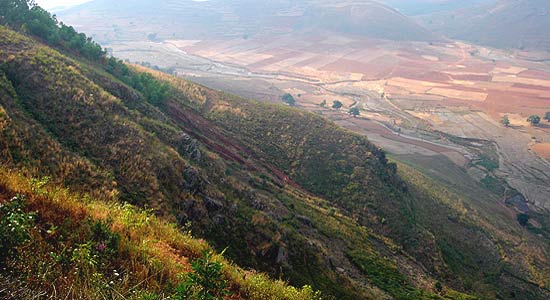
Niyamgiri


Niyamgiri is a hill range, about 250 sq. km. in area (Daspatnaik P.1984) lying between19.33 degree N lat. and 83. 25 degree E longitude (Patnaik, N. and Daspatnaik, P.1982).It forms the northernmost hill in the massif of the cluster of hills called the Niyamgiris or the Dongaria Kondh country. Also known as the NiyamDongar, it runs in a southwest alignment with a maximum elevation of 1306 meters.


From socio-cultural, anthropological as well as geographic point of view, this is a singlehill-country; but from administrative point of view, the area comes three districts viz. Kalahandi, Rayagada and Koraput.


To the anthropologists, Niyamgiri Hills are better known as the country of ‘DongriaKondhs’. Dongaria Kondha is one of the primitive and scheduled tribes of the State andenjoys a critical and symbiotic relation with the Niyamgiri forests. The Dongarias believethat the hill country belongs to Niyam Raja Penu, a male deity represented by a sword andworshipped during Dussera and Jura parab. They claim themselves to be descendants of the Niyam Raja. The Dongrias have derived their name from 'dongar' meaning agriculturalland on hill slopes. If one claims to be a Dongaria Kondha, he must reside in the Niyamgiri hills andpossess land of his own, and pass on to his posterity (P.S. Daspattnaik, ‘Ownership Pattern, land


Survey and Settlement and Its Impact on the Dongaria Kondhas of Orissa’ published in ‘Adibasi’Journal in January 1984, Vol. XXIII, No. 4, p.26). The Dongrias have a distinguishedheritage, because of their dress style, mode of living, indigenous skills, cultural patternand social system interlinked with nature and forests.Both culturally and ecologically, the Niyamgiri hills are extremely rich and significant.Most importantly Niyamgiri Hills are the source of Vansadhara river as well as a majortributary of Nagavali river. It forms a distinct phytogeographical zone because of itsheight and its highly precipitous topography. It also has some of the most pristine forestsin Orissa, and is home to a number of vulnerable wildlife species including tiger,leopards, sloth bear, pangolin, palm civet, giant squirrel, mouse deer, langur and sambhar,etc. It is also on the path of migration corridor of elephants, and comes within theterritory of Royal Bengal Tiger. In view of its ecological importance, it was declared asnature conservation / game sanctuary and also was proposed as a Wild Life Sanctuary in the working plan of Kalahandi Forest Division. The State Wildlife organization has a proposal to declare this area as South Orissa Elephant Reserve as mentioned in the vidememo no. 4643/3WL(Cons) 34/04 dated 20.08.2004.


Pettition


To: all


Dear frnds


This is the pettition to our prime to say stop operation green hunt Am expecting my frinds will say am a "desh drohi" When am heard about the death of 76 CRPF jawans am thinks kishanji is a desh drohi But now i can reyalize and i can feel who is the reyal desh drohi is just take a look at theese storys and you can find me at facebook @ idukkiarun@gmail.com and my private blog is www.forwerdmd.blogspot.com


1) The niyam giri


Save the Niyamgiri HillsNiyamgiri Hills, named after the Niyamraja, the main deity of the Donagria Kondhs, are one of last untouched wildernesses of Orissa. Rising to a height of more than four thousand feet, it is the source of Vamshadhara river as well as major tributaries of Nagavali rivers. Niyamgiris form a distinct phytogeographical zone because of its height and its highly precipitous topography . It has some of the most pristine forests in Orissa. Niyamgiri flora is of ‘great phyto-geographical importance’ as the hilltops harbor high altitude plants with Himalayan/North Indian and Nilgiri/South Indian elements. Preliminary studies show that it has approximately 50 species of important medicinal plants, about 20 species of wild ornamental plants, and more than 10 species of wild relatives of crop plants such as sugarcane (protected under the International Undertaking on Plant Genetic Resources (Rome, 23 November 1983


2)The Operation green hunt


CHANDRAPUR: The first phase of the much talked about concerted operation against the Maoist rebels’ jungle bases — Operation Green Hunt —has begun in the Naxal-infested Gadchiroli district. As many as 18 companies of central paramilitary forces (CPMF) have been deployed in key Naxal infested areas identified for the offensive, close to the tri-junction of Maharashtra-Andhra Pradesh-Chhattisgarh.


These CPMF commandos have initiated search operations in coordination with the local security forces in their respective areas, sources in Gadchiroli police have said. The 1,800 CPMF commandos arrived in Gadchiroli on Wednesday last and were subsequently positioned in places identified for their deployment. “The Operation Green Hunt will be quite opposite to the one carried out in Lalgarh, West Bengal. The forces will penetrate Naxaldominated areas, clear and sanitise the locations and hold the territory so that other government agencies could move in to initiate developmental work.


And also you can see theese storys


this one http://sanhati.com/mediawatch/2269/


here


http://chhattisgarh.ozg.in/2010/04/green-hunt-corp-adivasi-maoist.html


here


http://expressbuzz.com/magazine/the-unending-war-of-kalinga/165638.html


here


http://www.hindu.com/2010/04/19/stories/2010041951410300.htm


and watch this video also


http://www.orissatv.com/specialShow.asp?glink=3&video=janamancha


This is the time to conclude who is reyaley want the operation green hunt


This is the time to declare the war aganist operation green hunt


Now say "Stop operation green hunt"


for signing this pettition


http://www.petitiononline.com/arunvmvm/petition.html


arun vm


idukkiarun@gmail.com

learn from the leaders


The heart of India is under attack

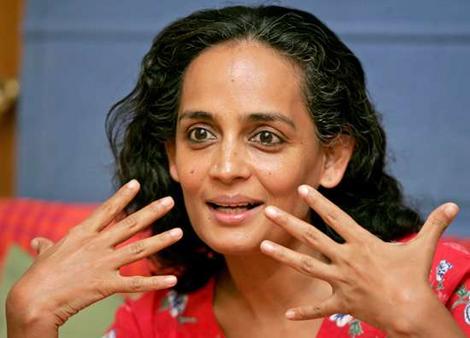
Arundhati Roy


Courtesy guardian.co.uk

The low, flat-topped hills of south Orissa have been home to the Dongria Kondh long before there was a country called India or a state called Orissa. The hills watched over the Kondh. The Kondh watched over the hills and worshipped them as living deities. Now these hills have been sold for the bauxite they contain. For the Kondh it's as though god had been sold. They ask how much god would go for if the god were Ram or Allah or Jesus Christ.


Perhaps the Kondh are supposed to be grateful that their Niyamgiri hill, home to their Niyam Raja, God of Universal Law, has been sold to a company with a name like Vedanta (the branch of Hindu philosophy that teaches the Ultimate Nature of Knowledge). It's one of the biggest mining corporations in the world and is owned by Anil Agarwal, the Indian billionaire who lives in London in a mansion that once belonged to the Shah of Iran. Vedanta is only one of the many multinational corporations closing in on Orissa.

If the flat-topped hills are destroyed, the forests that clothe them will be destroyed, too. So will the rivers and streams that flow out of them and irrigate the plains below. So will the Dongria Kondh. So will the hundreds of thousands of tribal people who live in the forested heart of India, and whose homeland is similarly under attack.
In our smoky, crowded cities, some people say, "So what? Someone has to pay the price of progress." Some even say, "Let's face it, these are people whose time has come. Look at any developed country – Europe, the US, Australia – they all have a 'past'." Indeed they do. So why shouldn't "we"?

In keeping with this line of thought, the government has announced Operation Green Hunt, a war purportedly against the "Maoist" rebels headquartered in the jungles of central India. Of course, the Maoists are by no means the only ones rebelling. There is a whole spectrum of struggles all over the country that people are engaged in–the landless, the Dalits, the homeless, workers, peasants, weavers. They're pitted against a juggernaut of injustices, including policies that allow a wholesale corporate takeover of people's land and resources. However, it is the Maoists that the government has singled out as being the biggest threat.

Two years ago, when things were nowhere near as bad as they are now, the prime minister described the Maoists as the "single largest internal security threat" to the country. This will probably go down as the most popular and often repeated thing he ever said. For some reason, the comment he made on 6 January, 2009, at a meeting of state chief ministers, when he described the Maoists as having only "modest capabilities", doesn't seem to have had the same raw appeal. He revealed his government's real concern on 18 June, 2009, when he told parliament: "If left-wing extremism continues to flourish in parts which have natural resources of minerals, the climate for investment would certainly be affected."

Who are the Maoists? They are members of the banned Communist party of India (Maoist) – CPI (Maoist) – one of the several descendants of the Communist Party of India (Marxist-Leninist), which led the 1969 Naxalite uprising and was subsequently liquidated by the Indian government. The Maoists believe that the innate, structural inequality of Indian society can only be redressed by the violent overthrow of the Indian state. In its earlier avatars as the Maoist Communist Centre (MCC) in Jharkhand and Bihar, and the People's War Group (PWG) in Andhra Pradesh, the Maoists had tremendous popular support. (When the ban on them was briefly lifted in 2004, 1.5 million people attended their rally in Warangal.)

But eventually their intercession in Andhra Pradesh ended badly. They left a violent legacy that turned some of their staunchest supporters into harsh critics. After a paroxysm of killing and counter-killing by the Andhra police as well as the Maoists, the PWG was decimated. Those who managed to survive fled Andhra Pradesh into neighbouring Chhattisgarh. There, deep in the heart of the forest, they joined colleagues who had already been working there for decades.

Not many "outsiders" have any first-hand experience of the real nature of the Maoist movement in the forest. A recent interview with one of its top leaders, Comrade Ganapathy, in Open magazine, didn't do much to change the minds of those who view the Maoists as a party with an unforgiving, totalitarian vision, which countenances no dissent whatsoever. Comrade Ganapathy said nothing that would persuade people that, were the Maoists ever to come to power, they would be equipped to properly address the almost insane diversity of India's caste-ridden society. His casual approval of the Liberation Tigers of Tamil Eelam (LTTE) of Sri Lanka was enough to send a shiver down even the most sympathetic of spines, not just because of the brutal ways in which the LTTE chose to wage its war, but also because of the cataclysmic tragedy that has befallen the Tamil people of Sri Lanka, who it claimed to represent, and for whom it surely must take some responsibility.
Right now in central India, the Maoists' guerrilla army is made up almost entirely of desperately poor tribal people living in conditions of such chronic hunger that it verges on famine of the kind we only associate with sub-Saharan Africa. They are people who, even after 60 years of India's so-called independence, have not had access to education, healthcare or legal redress. They are people who have been mercilessly exploited for decades, consistently cheated by small businessmen and moneylenders, the women raped as a matter of right by police and forest department personnel. Their journey back to a semblance of dignity is due in large part to the Maoist cadre who have lived and worked and fought by their side for decades.

If the tribals have taken up arms, they have done so because a government which has given them nothing but violence and neglect now wants to snatch away the last thing they have – their land. Clearly, they do not believe the government when it says it only wants to "develop" their region. Clearly, they do not believe that the roads as wide and flat as aircraft runways that are being built through their forests in Dantewada by the National Mineral Development Corporation are being built for them to walk their children to school on. They believe that if they do not fight for their land, they will be annihilated. That is why they have taken up arms.

Even if the ideologues of the Maoist movement are fighting to eventually overthrow the Indian state, right now even they know that their ragged, malnutritioned army, the bulk of whose soldiers have never seen a train or a bus or even a small town, are fighting only for survival.
In 2008, an expert group appointed by the Planning Commission submitted a report called "Development Challenges in Extremist-Affected Areas". It said, "the Naxalite (Maoist) movement has to be recognised as a political movement with a strong base among the landless and poor peasantry and adivasis. Its emergence and growth need to be contextualised in the social conditions and experience of people who form a part of it. The huge gap between state policy and performance is a feature of these conditions. Though its professed long-term ideology is capturing state power by force, in its day-to-day manifestation, it is to be looked upon as basically a fight for social justice, equality, protection, security and local development." A very far cry from the "single-largest internal security threat".

Since the Maoist rebellion is the flavour of the week, everybody, from the sleekest fat cat to the most cynical editor of the most sold-out newspaper in this country, seems to be suddenly ready to concede that it is decades of accumulated injustice that lies at the root of the problem. But instead of addressing that problem, which would mean putting the brakes on this 21st-century gold rush, they are trying to head the debate off in a completely different direction, with a noisy outburst of pious outrage about Maoist "terrorism". But they're only speaking to themselves.

The people who have taken to arms are not spending all their time watching (or performing for) TV, or reading the papers, or conducting SMS polls for the Moral Science question of the day: Is Violence Good or Bad? SMS your reply to ... They're out there. They're fighting. They believe they have the right to defend their homes and their land. They believe that they deserve justice.
In order to keep its better-off citizens absolutely safe from these dangerous people, the government has declared war on them. A war, which it tells us, may take between three and five years to win. Odd, isn't it, that even after the Mumbai attacks of 26/11, the government was prepared to talk with Pakistan? It's prepared to talk to China. But when it comes to waging war against the poor, it's playing hard.


It's not enough that special police with totemic names like Greyhounds, Cobras and Scorpions are scouring the forests with a licence to kill. It's not enough that the Central Reserve Police Force (CRPF), the Border Security Force (BSF) and the notorious Naga Battalion have already wreaked havoc and committed unconscionable atrocities in remote forest villages. It's not enough that the government supports and arms the Salwa Judum, the "people's militia" that has killed and raped and burned its way through the forests of Dantewada leaving 300,000 people homeless or on the run. Now the government is going to deploy the Indo-Tibetan border police and tens of thousands of paramilitary troops. It plans to set up a brigade headquarters in Bilaspur (which will displace nine villages) and an air base in Rajnandgaon (which will displace seven). Obviously, these decisions were taken a while ago. Surveys have been done, sites chosen. Interesting. War has been in the offing for a while. And now the helicopters of the Indian air force have been given the right to fire in "self-defence", the very right that the government denies its poorest citizens.
Fire at whom? How will the security forces be able to distinguish a Maoist from an ordinary person who is running terrified through the jungle? Will adivasis carrying the bows and arrows they have carried for centuries now count as Maoists too? Are non-combatant Maoist sympathisers valid targets? When I was in Dantewada, the superintendent of police showed me pictures of 19 "Maoists" that "his boys" had killed. I asked him how I was supposed to tell they were Maoists. He said, "See Ma'am, they have malaria medicines, Dettol bottles, all these things from outside."

What kind of war is Operation Green Hunt going to be? Will we ever know? Not much news comes out of the forests. Lalgarh in West Bengal has been cordoned off. Those who try to go in are being beaten and arrested. And called Maoists, of course. In Dantewada, the Vanvasi Chetana Ashram, a Gandhian ashram run by Himanshu Kumar, was bulldozed in a few hours. It was the last neutral outpost before the war zone begins, a place where journalists, activists, researchers and fact-finding teams could stay while they worked in the area.

Meanwhile, the Indian establishment has unleashed its most potent weapon. Almost overnight, our embedded media has substituted its steady supply of planted, unsubstantiated, hysterical stories about "Islamist terrorism" with planted, unsubstantiated, hysterical stories about "Red terrorism". In the midst of this racket, at ground zero, the cordon of silence is being inexorably tightened. The "Sri Lanka solution" could very well be on the cards. It's not for nothing that the Indian government blocked a European move in the UN asking for an international probe into war crimes committed by the government of Sri Lanka in its recent offensive against the Tamil Tigers.
The first move in that direction is the concerted campaign that has been orchestrated to shoehorn the myriad forms of resistance taking place in this country into a simple George Bush binary: If you are not with us, you are with the Maoists. The deliberate exaggeration of the Maoist "threat" helps the state justify militarisation. (And surely does no harm to the Maoists. Which political party would be unhappy to be singled out for such attention?) While all the oxygen is being used up by this new doppelganger of the "war on terror", the state will use the opportunity to mop up the hundreds of other resistance movements in the sweep of its military operation, calling them all Maoist sympathisers.

I use the future tense, but this process is well under way. The West Bengal government tried to do this in Nandigram and Singur but failed. Right now in Lalgarh, the Pulishi Santrash Birodhi Janasadharaner Committee or the People's Committee Against Police Atrocities – which is a people's movement that is separate from, though sympathetic to, the Maoists – is routinely referred to as an overground wing of the CPI (Maoist). Its leader, Chhatradhar Mahato, now arrested and being held without bail, is always called a "Maoist leader". We all know the story of Dr Binayak Sen, a medical doctor and a civil liberties activist, who spent two years in jail on the absolutely facile charge of being a courier for the Maoists. While the light shines brightly on Operation Green Hunt, in other parts of India, away from the theatre of war, the assault on the rights of the poor, of workers, of the landless, of those whose lands the government wishes to acquire for "public purpose", will pick up pace. Their suffering will deepen and it will be that much harder for them to get a hearing.

Once the war begins, like all wars, it will develop a momentum, a logic and an economics of its own. It will become a way of life, almost impossible to reverse. The police will be expected to behave like an army, a ruthless killing machine. The paramilitary will be expected to become like the police, a corrupt, bloated administrative force. We've seen it happen in Nagaland, Manipur and Kashmir. The only difference in the "heartland" will be that it'll become obvious very quickly to the security forces that they're only a little less wretched than the people they're fighting. In time, the divide between the people and the law enforcers will become porous. Guns and ammunition will be bought and sold. In fact, it's already happening. Whether it's the security forces or the Maoists or noncombatant civilians, the poorest people will die in this rich people's war. However, if anybody believes that this war will leave them unaffected, they should think again. The resources it'll consume will cripple the economy of this country.

Last week, civil liberties groups from all over the country organised a series of meetings in Delhi to discuss what could be done to turn the tide and stop the war. The absence of Dr Balagopal, one of the best-known civil rights activists of Andhra Pradesh, who died two weeks ago, closed around us like a physical pain. He was one of the bravest, wisest political thinkers of our time and left us just when we needed him most. Still, I'm sure he would have been reassured to hear speaker after speaker displaying the vision, the depth, the experience, the wisdom, the political acuity and, above all, the real humanity of the community of activists, academics, lawyers, judges and a range of other people who make up the civil liberties community in India. Their presence in the capital signalled that outside the arclights of our TV studios and beyond the drumbeat of media hysteria, even among India's middle classes, a humane heart still beats. Small wonder then that these are the people who the Union home minister recently accused of creating an "intellectual climate" that was conducive to "terrorism". If that charge was meant to frighten people, it had the opposite effect.

The speakers represented a range of opinion from the liberal to the radical left. Though none of those who spoke would describe themselves as Maoist, few were opposed in principle to the idea that people have a right to defend themselves against state violence. Many were uncomfortable about Maoist violence, about the "people's courts" that delivered summary justice, about the authoritarianism that was bound to permeate an armed struggle and marginalise those who did not have arms. But even as they expressed their discomfort, they knew that people's courts only existed because India's courts are out of the reach of ordinary people and that the armed struggle that has broken out in the heartland is not the first, but the very last option of a desperate people pushed to the very brink of existence. The speakers were aware of the dangers of trying to extract a simple morality out of individual incidents of heinous violence, in a situation that had already begun to look very much like war. Everybody had graduated long ago from equating the structural violence of the state with the violence of the armed resistance. In fact, retired Justice PB Sawant went so far as to thank the Maoists for forcing the establishment of this country to pay attention to the egregious injustice of the system. Hargopal from Andhra Pradesh spoke of his experience as a civil rights activist through the years of the Maoist interlude in his state. He mentioned in passing the fact that in a few days in Gujarat in 2002, Hindu mobs led by the Bajrang Dal and the VHP had killed more people than the Maoists ever had even in their bloodiest days in Andhra Pradesh.
Collected from
munnamidam
a weekly in malayalm online

Wednesday, April 21, 2010

The Hindu : Arts / Cinema : Friend and filmmaker

For the various peoples' movements in Kerala, the passing away of Saratchandran, documentary filmmaker and activist, is a heart-wrenching loss of a dear comrade and relentless chronicler. He was an integral part of all the major popular struggles in the region during the last few decades. Right from the legendary Silent Valley movement and Mavoor struggle against Gwalior Rayons, to the popular protest at Plachimada against Coca Cola and the Chengara land rights struggle, he was there, rubbing shoulders with them, sharing their dreams and frustrations. Sarat's filmography literally reads like a chronicle of the history of resistance in Kerala during the last decades on major fronts – environment, anti-pollution, displacement, right to land and livelihood.

Documenting the world

For Sarat, filmmaking was a political act where cinema accomplished one of its most elemental of qualities: to ‘document' the world before it and to bring those images back to the people. Sarat was a virtual conduit of images between the world and Kerala, taking images of local resistance to the world and vice versa. The very process of filmmaking he adopted involved the people at all stages – from background research and shooting to distribution and exhibition. For him, filmmaking did not end with the making of a film; he travelled extensively to create a network of filmmakers, activist groups, and campuses in order to show films and open up new horizons for youngsters and activists alike. He was not averse to new technologies. As an activist involved in political and environmental issues, he sensed that video technology was more mobile, affordable and accessible than the celluloid.
Read full story at
The Hindu : Arts / Cinema : Friend and filmmaker

Say "stop operation green hunt" Petition

Say "stop operation green hunt" Petition

Tuesday, March 2, 2010

computer learningorg


                                                   finding an answer to data recovery and make huge back up we need to understand how the data is stored in a hard disk commonly HD is a data soring device known as secondary storage that can store data as in the form of 0's and 1's HDDs record data by magnetizing ferromagnetic material directionally, to represent either a 0 or a 1 binary digit. They read the data back by detecting the magnetization of the material. A typical HDD design consists of a spindle that holds one or more flat circular disks called platters, onto which the data are recorded. The platters are made from a non-magnetic material, usually aluminum alloy or glass, and are coated with a thin layer of magnetic material, typically 10–20 nm in thickness — for reference, standard copy paper may be between 0.07 millimetres (70,000 nm) and 0.18 millimetres (180,000 nm) thick.[8] — with an outer layer of carbon for protection. Older disks used iron(III) oxide as the magnetic material, but current disks use a cobalt-based alloy
 
 
              How the data recovery works? A common misconception is that the data is actually removed from the hard drive (erased) when you delete a file. Any time that a file is deleted on a hard drive, it is not erased. Instead, the tiny bit of information that points to the location of the file on the hard drive is erased. This pointer, along with other pointers for every folder and file on the hard drive, is saved in a section near the beginning of the hard drive and is used by the operating system to compile the directory tree structure. By erasing the pointer file, the actual file becomes invisible to the operating system. Eventually, the hard drive will write new data over the area where the old file is located.
                                                                                                                     There are several hard disk utilities that you can find on the Internet that allow you to recover "deleted" files. What these utilities do is search for data on the hard drive that does not have corresponding pointer information and present you with a list of these files. Your chances of fully recovering a file diminish the longer you wait after you deleted the file since the probability that the file has been overwritten increases. Sometimes you can recover portions of a file that has not been completely overwritten.

screen shot of one of the most wanted free ware soft you can dwnld it free
more details log on to here
we can make change here

Monday, March 1, 2010

A


Making a Computer solution
                                                          
What is a computer solution? A solution is a word that is used to refer to solving and maintaining a user friendly system. It is a group of machines organised by programs. Take supermarkets for example. In day to day life all or us are familiar with supermarkets, all of us go there and buy goods. We alwayssee lots of machines and these are all part of retail solutions.,
                                                                                        bar code reader


                                                                              printers


as well as security installations, such a cameras. These all co-ordinate data for supermarkets. If we dig into these solutions a little more we can find the answers to questions listed below.
                                      What stock is available?

                                      What product is more attractive to customers?
                                      What is the criteria for buying stock for the supermarkets?
                                      What is the quality of each product?

                                      How can a customer find a product easily in the store?

                                      How does one keep the customer happy?

                                      How can the supermarket prevent shop lifting from their store?
                                      Establishing criteria for buying products for the supermarket.
 
 
 Analysing these strategies, we can find some solutions, For the first example, what stock is available? If we need to find this out, a well organised computer system, with each tally point connectd to server, then the server can establish  what has been sold more of and what needs to be purchased. The bar code reader is used to price each product. A customer service provider can tell the customer   where the product is.


 From this picture we can find server need a software that can make Back up in at every shut down  And only made to make admin can fetch data from it Then the client machine's need application That only used for billing Collecting data's from Peripherals connected to it and tell to server What is sold out there
 
Decision making - a methodology
             What all are the ways to arrange randomly selected cards?. now we can add an algorithm here by step by step
                                                                                                                                                                   
                                                     algorithm for sorting randomly selected cards
 
                                                                        STEP1:start
                                                                      
                                                                        STEP2:take the card
 
                                                                        STEP3:Check it is sorted or not
 
                                                                        STEP4:if sorted go to 5 else go to 2
 
                                                                        STEP5:end
 
 
 Here is the basic  algorithm for sorting cards, Then go to find a solution for sorting cards
 
We can made a change


Tuesday, February 23, 2010

what we going to select


what all are we going to select theese ones or new one


help us to completing this task

Monday, February 22, 2010

Thank you to visit in this blog Education is growth but what happend some one sells education we need to over come this problem coze we cant spoil our bthers life And his future